Tallahassee Screening provides commercial screen installation in Tallahassee, FL for hotels, restaurants, multifamily properties, and community facilities.
Tallahassee Screening provides commercial screen installation in Tallahassee, FL for hotels, restaurants, multifamily properties, and community facilities. We design and install durable screened enclosures and partitions that handle heavy use while keeping outdoor spaces comfortable and protected.
Tallahassee Screening provides professional commercial screen installation throughout Tallahassee, FL, Florida and the surrounding area. Our licensed, insured crew delivers safe, clean, on-time work with a free estimate before anything begins. Call (850) 755-9909 or request your free quote.
Tallahassee Screening provides commercial screen installation tailored to the unique mix of properties across Tallahassee, from mid-century office buildings along Apalachee Parkway to newer retail centers on North Monroe and Southwood. We focus on practical, durable solutions that fit your building type, your traffic levels, and your maintenance budget.
Commercial projects are very different from residential work. You may need screened areas that meet accessibility requirements, withstand constant customer use, and coordinate with existing storefront systems. Our team evaluates structural conditions, wind exposure, fire egress paths, and local code requirements before recommending any design so you get a project that is attractive and compliant, not just “good enough.”
Whether you manage a restaurant that wants an enclosed patio, a multi-tenant office complex that needs screened balconies, or an industrial facility that must control insects at loading bays, Tallahassee Screening approaches your project with the same level of planning, documentation, and professional installation standards.
Commercial screen installation covers a wide range of systems, and choosing the right one affects both cost and performance.
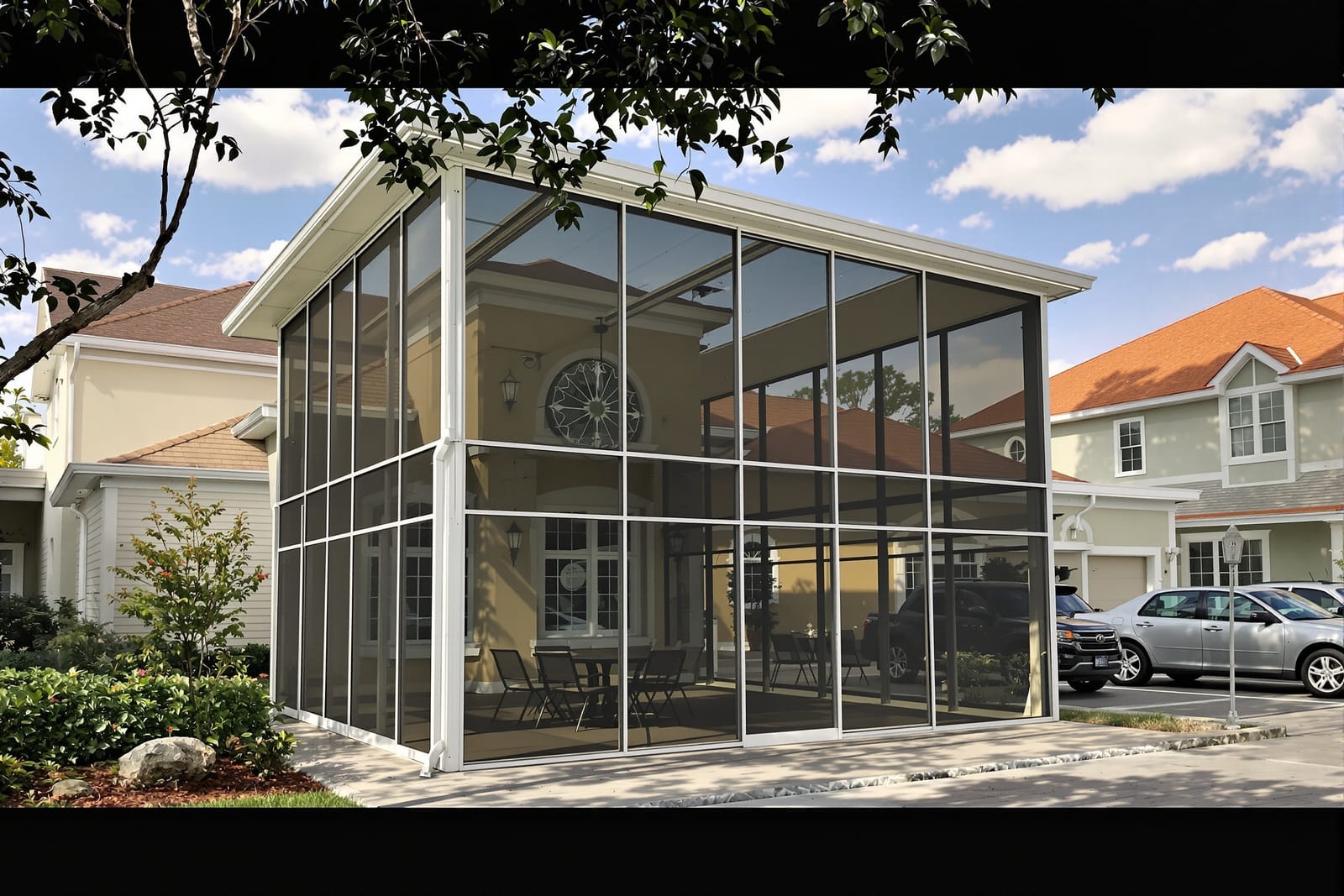
For restaurants and bars, we frequently install screened enclosures around outdoor seating. These may be full-height aluminum structures tied into existing roofs or freestanding frames with integrated doors, clear vinyl panels for winter use, and heavier insect screening to handle late-summer mosquito peaks around Tallahassee.
Office buildings and multi-family properties often need screened balconies or common-area porches. Here we use heavier-gauge aluminum frames, continuous fastener tracks, and better corrosion-resistant hardware because these areas tend to be higher off the ground and more exposed to wind, especially on taller buildings near downtown.
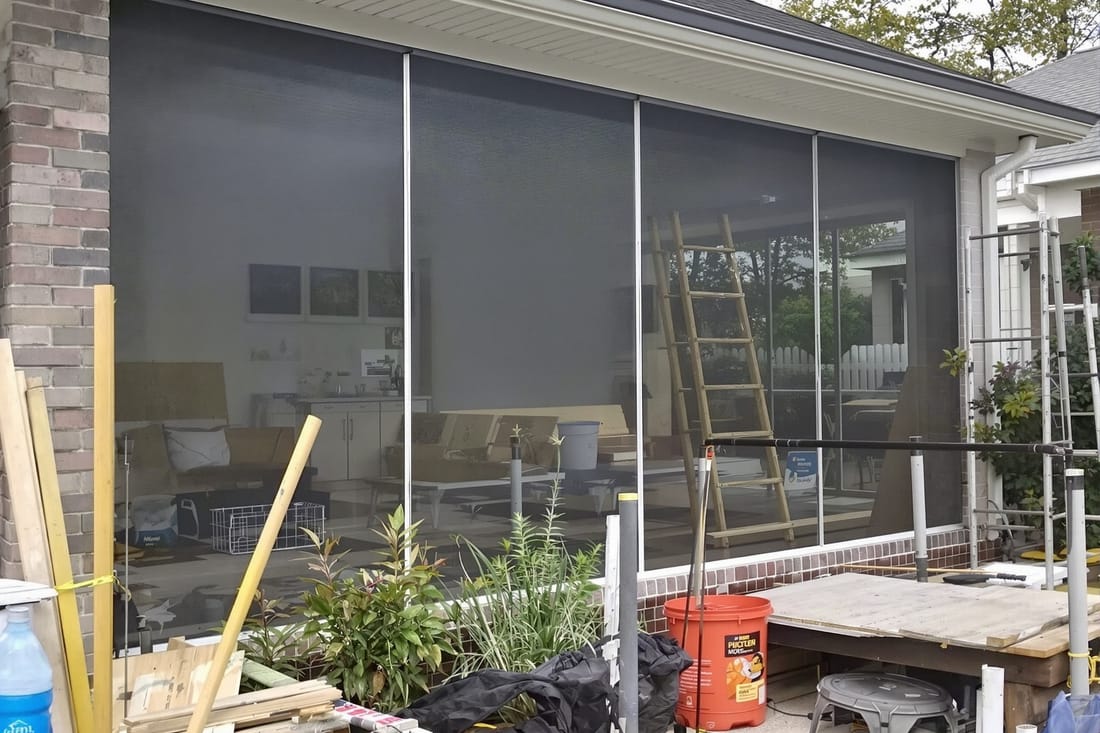
Industrial and warehouse clients typically require screening at loading docks and service doors to meet sanitation standards and reduce pest pressure. For these, we may recommend large sliding or roll-up screen panels that clear wide openings for trucks, along with reinforced lower panels that can withstand equipment bumps.
Retail centers and mixed-use buildings may use screen walls to define outdoor waiting areas or smoking sections. These can include custom color-matched frames, kick plates, and signage integration so the enclosure looks like part of the original construction rather than an afterthought.
Tallahassee Screening follows a defined process for commercial screen installation so that property managers and owners know what to expect and can coordinate around tenants, health inspections, and business hours.
The first step is a site visit and assessment. We measure existing structures, check slab conditions, note roof types, and look for conflicts with fire exits, sprinkler coverage, signage, and HVAC equipment. For restaurants, we also pay attention to grease exhaust, fan locations, and clearances that might affect future code inspections.
Next, we discuss usage and durability expectations. Will the space be used every night, or only for seasonal events? Do you need clear vinyl panels for temperature control, pet-resistant screening, privacy screening, or basic insect control? The answers determine frame profiles, screening material, and fastening methods.
We then provide a written proposal that includes a plan view or simple elevation sketches where helpful, material specifications, color options, and a realistic schedule. For more complex properties, we coordinate with your GC, architect, or facility manager so our framing and attachment details align with existing drawings.
Once approved, we order materials, fabricate custom components as needed, and confirm an installation schedule that minimizes disruption. During installation, our crews protect surrounding finishes, maintain safe access paths for staff and customers, and keep noise and dust as low as reasonably possible. At completion, we walk the site with you, inspect each opening, and address any adjustments before final sign-off.
Choosing the right combination of frame, hardware, and screening is critical in Tallahassee’s humid, storm-prone environment.
For frames, we primarily use commercial-grade aluminum that resists corrosion in high humidity and around kitchen exhaust. Thicker wall profiles are recommended for taller structures, large spans, and locations exposed to higher winds. We offer several factory finishes, most commonly white, bronze, and black, and can coordinate custom colors for projects that match brand standards or existing storefront systems.
For the screening material itself, basic fiberglass insect screen is common for low-impact areas, but many commercial clients benefit from upgrades. Pet-resistant polyester or vinyl-coated screens work well in restaurants with heavy chair contact. For loading docks or service corridors, we might recommend a stronger mesh with higher tear resistance. Where visibility and ventilation are important, we can specify a thinner, darker screen that maintains air flow while remaining discrete.
Additional design features can include self-closing commercial doors with continuous hinges, ADA-compliant thresholds, integrated kick plates in high-traffic zones, and removable panels for equipment access. In some patios, we integrate clear vinyl or acrylic panels above the chair rail height so you maintain visibility while improving wind buffering and shoulder-season comfort.
There are several real factors that influence pricing for commercial screen installation, and understanding them upfront helps you plan your budget.
Scope and size are the most obvious drivers. A full perimeter restaurant enclosure with multiple doorways, tie-ins to existing rooflines, and custom angles will cost more per square foot than a straightforward rectangular dock screen. Height also matters, because taller structures require heavier framing, more labor, and sometimes lift equipment.
Existing building conditions have a big impact. Tying into an older masonry wall in Midtown, where surfaces may be out of plumb and finishes are brittle, is more complex than attaching to new concrete or steel framing. If there are existing awnings, gutters, or low roof edges, we might need custom brackets or flashing to ensure proper drainage and water management.
Material choices affect both upfront cost and lifespan. Upgraded screen fabrics, heavier aluminum, stainless steel fasteners, and commercial-grade door hardware cost more initially but significantly reduce maintenance and replacement cycles. For businesses that rely heavily on outdoor seating revenue, better materials often pay for themselves by reducing downtime.
Scheduling and site constraints (night-only work, phased installation around peak business hours, or work in restricted access courtyards) can also influence labor cost. We discuss these factors clearly in our proposals so you can compare options and choose the balance of durability, aesthetics, and budget that works best for your operation.
Tallahassee’s weather and regulatory environment shape how we design and install commercial screen systems. High humidity, frequent summer storms, and occasional tropical systems mean we must think carefully about drainage, wind loading, and corrosion resistance from the beginning.
We evaluate how rain currently moves across your patios and walkways and design screen frames and door thresholds that do not trap water against your building. Improperly designed enclosures can create slipped hazards, rot thresholds, or seepage into indoor spaces. Tallahassee Screening uses appropriate sealants, flashing, and fastener placement to protect surrounding finishes.
Even though many screen enclosures are considered non-habitable, they can still affect emergency egress and accessibility. We maintain clear exit routes, proper door swing direction, and accessible thresholds in line with commercial expectations. For restaurants and food service facilities, we consider health department concerns about pest exclusion, cleanability, and clear separation between food prep and screened dining areas.
Because local tree cover is dense in many areas of Tallahassee, from Killearn to Betton Hills, we also look at nearby limbs and debris sources. Where needed, we specify screen types and fastening methods that hold up better against falling leaves, twigs, and everyday contact, and we recommend maintenance intervals that match your actual site conditions rather than a generic schedule.
Commercial property owners and managers in Tallahassee work with Tallahassee Screening because we focus on long-term performance, not quick one-size-fits-all installs. We have hands-on experience with local property types, from historic structures that need gentle attachment methods to new mixed-use developments that must stay consistent with architectural guidelines.
Our team is comfortable coordinating with facility managers, landlords, franchise representatives, and contractors. We know that last-minute changes to patio layouts, signage, or outdoor equipment happen, especially during build-outs or rebranding efforts, so we plan our installation approach with enough flexibility to adapt without compromising the final product.
We stand behind our work with clear workmanship warranties, and we are available for future service if screens are damaged by storms, tenants, or everyday wear. When needed, we can phase projects, starting with the most critical openings so you can keep operations running while improvements are made.
If you are considering commercial screen installation for your Tallahassee property, Tallahassee Screening can walk you through realistic options, detailed costs, and a schedule that respects your business. Our goal is a finished screen system that looks intentional, functions reliably, and supports your business operations season after season.
Professional commercial screen installation, done right the first time, quality materials, honest pricing, and results that last.Tallahassee Screening